Old roof coverings bring the kind of authority you can not fake. Slate that works out with age, clay tiles that throw a cozy shadow in late mid-day, standing-seam frying pans that still sound when you knock them with a knuckle. When wintertime shows up, all that personality fulfills gravity. Snow and ice slide with remarkable force, and without a thoughtful snow retention approach, they shear seamless gutters, snap finials, crush landscaping, and, worst of all, threaten people below. The right snow guard system, sized and outlined for the structure and the climate, is the difference in between an elegant thaw and a devastating avalanche.
Material selection rests at the center of that choice, particularly for heritage structures. Copper, steel, and bronze each bring unique staminas in toughness, aging, and compatibility with historic textile. I have mounted and defined all three on tasks from century-old churches to Adirondack lodges, and the pattern is constantly the very same: the very best end result comes from matching product to roof system, local loading, and the building's tale. It is not a coating decision, it is a performance decision that occurs to stay in simple sight.
What snow guards do on a heritage roof
A snow guard, whether a little specific cleat or a continual bar, offers a basic objective: keep snow and ice from gliding simultaneously. On slate and ceramic tile, where rubbing is low, the risk is a sheet that lets go after a cozy day, then re-freezes and decrease in the evening. Steel roofing systems act likewise, in some cases worse, due to the fact that smooth pans motivate long-run slides. The lots are not theoretical. On a 40-foot run of roofing in Vermont with 30 pounds per square foot of snow, the saved energy at the eave can surpass what several fascia settings up or seamless gutters were ever made to hold. You do not think with those forces, you determine and test.
On heritage buildings, a 2nd objective matters equally: aesthetic integration. Stonework cornices, lead-coated copper valleys, hand-dressed slate courses, and custom-made cupolas bring a visual logic. Any type of treatment has to review as if it belonged there from the beginning. An excellent snow guard system is the unusual piece of security devices that can also strengthen the building story.
Bar, pad, and hybrid systems
Before getting involved in steels, it aids to fix terms. Pad-style guards, in some cases called cleats, are private systems connected to each slate or floor tile with a hook or band, then flashed into the course over. Bar systems run flat along the roofing, affixing to rafters or seams at a routine spacing. Crossbreed systems, like pipe-and-seam clamps on standing-seam roofing systems, wed modular equipment to continual bars.
On future of smooth steel or heavy-snow sites, continuous bars make sense. They spread lots and produce repetitive restraint lines. On delicate slate, especially where replacement slates are limited, pad-style guards, made use of in volume and startled up the slope, disperse force with much less take advantage of on any kind of single puck. Several heritage projects wind up with a mix: very discreet pad guards greater on the area and a line or two of bar near the eave to lock the bottom course.
Now to the steels themselves.
Copper: the traditional partner for slate, lead-coated copper, and clay tile
If you ask a slater with gray at the holy places for a one-word response, you will most likely listen to copper. It deals with the chemistry of slate and clay, it lasts longer than a lot of us, and it patinates right into something that looks inevitable.
Copper's aging is more than shade. The oxide layer becomes its shield. On seaside jobs I have actually viewed new copper snow guards mute from bright cent to a polite brown-green in under two years, then hold for decades. On inland churches we have drawn 70-year-old guards that still sound like a bell when touched. That service life, coupled with the capability to solder, braze, or rivet assemblies tidily, makes copper the first call when the roof covering is copper, slate, or tile.
A few functional notes from the area. Copper's toughness in plate kind is small compared to steel, so you make with depth and account rather than brute density. A two-inch-upstand cleat with a folded hem behaves much better than a thin tab. Bolts need to be compatible. Stainless into copper serves, but I like copper rivets or bronze screws when the substratum allows. Galvanized bolts are a nonstarter for deterioration factors. If you have lead-coated copper valleys and flashings, copper guards sit alongside them easily. On stone-trimmed cornices, a row of copper bar braces can check out like railings, not attachments.
Color control is complicated. If you require an uniform, pre-weathered look on the first day, request for factory brownish or blackened copper coatings that hold through handling. Natural copper will certainly never match existing 80-year-old frying pans on setup day. That mismatch generally bothers owners for 6 months, after that the aspects do their job, and the entire roofing system pulls together.
Weight typically comes up. A normal pad guard with band evaluates a couple of ounces. Also if you mount 500 on a large slate roofing, you are adding tens of extra pounds, not hundreds, spread over countless square feet. Simply put, for structural calculations copper's self-weight is noise. The genuine lots to prepare for is the snow itself.
Where copper is not suitable gets on repainted steel roofing systems where the proprietor desires a crisp, color-matched system that checks out contemporary, or on budget-sensitive jobs where the price delta across numerous systems adds up. Copper market prices swings. On a historical collection we valued copper pad guards at approximately one and a fifty percent to two times the cost of similar repainted stainless devices. The library board selected copper anyhow, since the seamless gutters, finials, and custom leader boxes were copper and the entire structure mattered greater than the line item.
Painted and stainless-steel: accuracy, stamina, and color matching
You select steel when you require higher yield strength in little areas, when you want a paint suit to a standing-seam roof covering, or when the task requires the crispest possible geometry. Stainless-steel brings deterioration resistance, low maintenance, and a svelte account. Carbon steel, hot-dip galvanized then powder covered, still works well in lots of areas, but I have actually greatly migrated to stainless for lifespan and peace of mind.
On a mountain lodge with 24-gauge steel standing joints, we defined a clamp-on bar system with stainless braces and aluminum cross tubes finished in the very same color as the roofing. The proprietor desired snow retention without noticeable fashion jewelry. Steel, with its capability to take powder layer that really matches a RAL chip, solved it. Copper would have shouted. Bronze would have argued. The stainless braces likewise gripped the joints without puncturing, which matters when vapor control and warranties come into play.
Sustainability and performance converge below. Modern high-solids coatings stand up to UV, chalking, and abrasion. In cities, residue and acid rainfall do their worst on painted steels. A Course 2 powder and a stainless substrate shrug it off for a lengthy home window. In wintertime, when snow slides, the paint finish under a bar system will see scuffing, yet the guard takes the tons prior to the sheet frying pan does.
Watch your galvanic couples. Stainless brackets on bare aluminum bars can produce a battery in damp settings. Usage isolating pads, matched metals, or manufacturing facility systems examined as a package. In salt air, I prevent any mixed-metal improvisation unless every interface has a known barrier. And be hesitant of slim zinc electroplating on fasteners coupled with stainless hardware. The little points rot first.
Steel's disadvantage, visually, is that it hardly ever disappears on older textile unless you devote to that modern comparison. On a Romanesque church we restored, a painted stainless bar near the eave dealt with the rock arches and lead pipes. We changed it with custom-made copper braces and a patinated tube, and unexpectedly the cornice really felt whole again.
Bronze: the peaceful hefty hitter for sea air and stone
Bronze occupies a special particular niche. It is the steel I grab when the site lives by salt or when the design leans timeless. The alloy family is wide, yet silicon bronze hardware and naval bronze parts have a strength and rust resistance that can outlive also copper in damp, aquatic climates. The aging ranges from abundant brownish to much deeper chocolate with time, and unlike lacquered brass, it does not betray fingerprints and scuffs.
Bronze is likewise stout. A bronze pad guard with a generous backplate and band can resist the lever activity of ice much better than a slim copper matching. On a cliffside estate in Maine, we utilized bronze cleats throughout the reduced third of a heavy-snow roofing with cedar trim and rock smokeshafts. After two winter seasons, the system showed just surface area burnishing. Copper would have succeeded. Bronze resembled it had actually expanded there with the granite.
The compromises are cost and availability. You are paying for the alloy, the machining, and the smaller sized manufacturing quantities. Bronze elements are also heavier than copper in similar sections, which may matter when you deliver thousands of pieces to a remote site. Patina matching can be an art. If you have existing bronze leader heads or custom finials that have actually reached a deep tone over decades, plan time to pre-patinate new guards and examination on mockups. An inequality reveals much more on bronze than on copper due to the fact that the brown household has much less chromatic forgiveness than the green.
Detailing matters greater than magazine specs
Material is the heading, however the quiet information determine whether a snow guard system offers for fifty winters months or six. On slate, I want a strap that hooks over the head of a slate 2 training courses up, not a nail-on tab that bets the farm on a solitary slate's resistance to pullout. On standing-seam, clamp torque should be established continually, and seams should be looked for oil canning and panel clip spacing. On tile, the saddle under a bar needs to spread tons over the rib, not squash the pan.
We found out a difficult lesson on a gallery annex with a bent copper roof covering. The first wintertime, ice sneaked under bench by capillary action, refroze, and raised the entire lower row right into a mild smile. The fix was a hemmed snow fence account that denied the ice a horizontal surface area, and a small pitch change that pushed thaw water to marked drains. The copper never ever grumbled. Our presumptions did.
Fasteners and substratums deserve their very own paragraph. Historic decks are seldom consistent. You will strike heart want, then a nineteenth-century spot of chestnut, then a 1980s plywood repair work. Pilot holes and correct thread selections keep the work from ending up being a forensic exercise in the attic room later. For bar systems, never depend on simply the deck. Discover rafters, after that hit them all. If the rafter pattern is irregular due to past work, map it with a tiny scope from the indoor first.
Flashing is not flexible. On slate and floor tile, each penetration needs correct bib blinking, and bands should vanish under the course over. On steel, through-fastened systems desire butyl or EPDM washers under a safety cap, and a repetitive seal where possible. Heat cable televisions and snow guards can live together, however handle their communication. A warm cable television right behind a bar can produce a wet microclimate that increases deterioration on the incorrect alloy pair.
Aesthetics, not as an afterthought
Snow guards line the eye in such a way you only notice when they are wrong. On Beaux-Arts cornices, the rhythm of braces need to resemble the dentils or modillions. On farmhouse roofings, a single low bar near the eave can really feel honest, while three lines in the field might look picky. I take elevations right into the yard and stand at the gate where site visitors arrive. If the very first read is an uniformly spaced picket fence of guards, I return within and lower. Heritage buildings are worthy of restraint.
Color is a device, not a crutch. On modern repainted steel roof coverings, matching the panel color makes good sense and streamlines. On slate, I have heated to the appearance of dark copper guards that read like shadow, not accessory. Bronze near limestone looks improved in a way that repainted metal never ever fairly achieves. Where a building currently carries Custom-made Chimney Shrouds or Custom-made Roof Vents in copper, proceeding that vocabulary across Custom-made Snow Guards is not simply meaningful, it is generous to the architecture.
There is room for joy, as well. A small estate we completed added a pair of custom cupolas and Custom-made Finials in rotated copper, with a field of snow cleats outlined to take the exact same soft bead. The proprietor called after a storm to say the roof looked like a winter season garden, not a danger. That type of remark tells you the metalwork joined the structure's voice.
Performance by climate and roofing system
Design modifications as you move across snow maps. In the mid-Atlantic, where snow is anecdotal and damp, a single eave bar and a spreading of pad guards up the area might suffice. In the Mountain ranges or northern New England, I begin my discussion at several rows, closer spacing, and robust add-on. On superficial pitches, snow lingers. On high pitches, it intends to sprint. The steeper the incline, the a lot more you ought to consider guards as a brake, not a barrier. The guard does not hold the entire mountain. It chops it into manageable pieces.
On standing-seam roofings, clamp-on systems stay clear of penetrating the panels and keep service warranties undamaged. Try to find clamps checked for your joint account and gauge. Aluminum cross tubes reduce weight and take paint well. If the roofing system is copper, copper tubes keep the galvanic table satisfied, and bronze clamps are a defensible luxury in coastal air.
On clay tile, one of the most elegant systems saddle the tile profile and tie back to the deck or batten without squashing the clay. Copper or bronze saddles sit easily here. Steel needs excellent finishing and mindful edges, or you will certainly see paint damage and corrosion halos where meltwater pools.
Slate is its very own language. I such as a staggered pattern of copper or bronze pad guards starting approximately two courses over the eave, after that stepping every 3rd or 4th program relying on incline and area. On large stretches, add a bar near the reduced 3rd. If the slate is soft or already friable, stop and take care of the roof covering initially. Snow guards are not a bandage for failing slate, they are a load path.
Integrating with various other customized metalwork
Heritage roofs rarely have a single metal component. They bring Personalized Leader Boxes at the downspouts, Custom Dormers with their very own flashing dancings, and occasionally a flourish of lightning defense air terminals. It pays to think of the snow guards not as an isolated system but as one component of a collaborated suite.
If a project already consists of brand-new Custom Smokeshaft Shrouds or Custom Roof covering Vents in copper from a trusted producer, lining up accounts and aging with the snow guards simplifies upkeep and synchronizes the visual field. On a courthouse reconstruction with Salvo Metal Works providing the copper leader heads and ornamental apexes, we sent them our snow guard profiles early. They returned a set of copper braces with the exact same grain detail as the finial bases. When the scaffold came down, the roof covering check out like a solitary author had composed it.
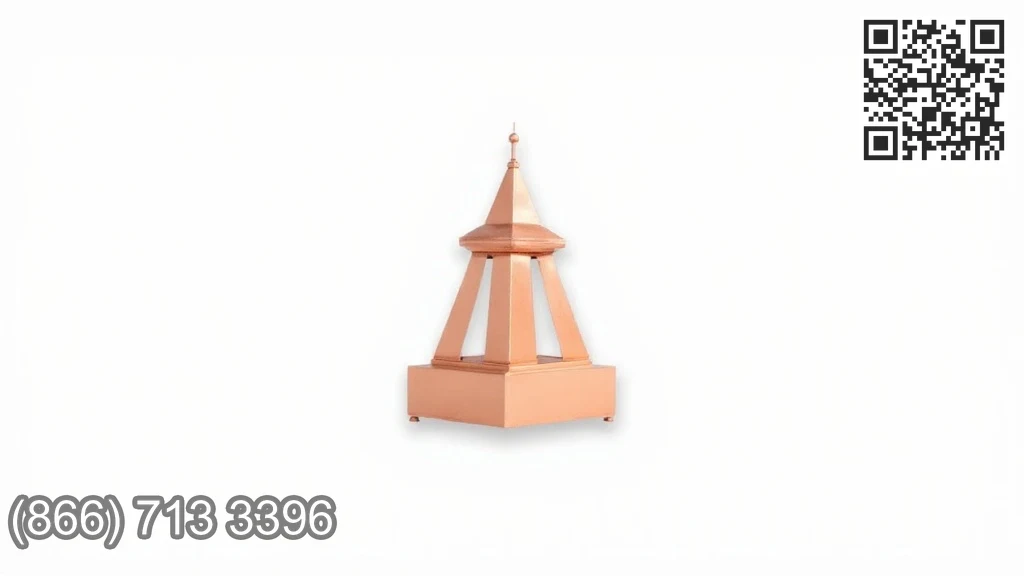
Do not fail to remember water drainage. Snow guards that do their job concentrate meltwater for longer at the eave. Make sure rain gutters, scuppers, and leader heads are sized as necessary. Personalized Leader Boxes are not only decorative, they take care of surges. Downspout warmth cables and snow retention can collaborate to ensure that meltwater leaves cleanly as opposed to refreezing into a pricey icicle sculpture.
Cost and lifecycle thinking, without illusions
Owners frequently request a fast price delta in between copper, stainless steel, and bronze. The straightforward answer is that it differs with steel markets, element complexity, and surface. As a general guide from proposals over the last couple of years: repainted stainless systems tend to land at the lower end, copper in the center to upper, bronze on top. On a medium slate roofing system needing 300 to 600 pad guards, the spread can be a couple of thousand to 10s of hundreds of bucks. Labor frequently controls anyhow, especially on steep or intricate roofs.
Where lifecycle enters into the conversation is access. If the structure is tall, metropolitan, and requires road authorizations and turn phases for any roofing system work, the least expensive mount today might not be the cheapest twenty-year choice. The per-piece premium for copper or bronze can go away if it protects against a 2nd mobilization to change stopping working painted steel in a decade. On a country barn roofing system you can get to with a lift, the calculus changes. There is nobody right response, just the technique to run the actual numbers for the site.
Maintenance should have a line or more. Copper and bronze ask for little greater than examination. Stainless-steel with quality layers acts likewise. Colored carbon steel desires eyes on sides and touch-ups before corrosion wins. On all systems, try to find loosening from freeze-thaw cycles and check that bars have not end up being racks for debris. Fallen leave loads gather behind bars near trees, and detritus holds moisture. A half day of autumn cleaning saves a lot of silent decay.
Common errors, and how to avoid them
I keep a small checklist from tasks we were contacted us to rescue. The very first error is under-sizing the system. 2 bars at the eave of a long, steep, north-facing roof covering in a high-snow area will refrain it. Usage manufacturer calculators as a starting factor, then change with neighborhood experience. The second is mixing inappropriate steels for equipment and assuming the sealant will certainly keep peace for life. It will not. Pick a metals system, then keep the family together.
Another constant error is inadequate alignment with structure. Striking only the deck with long screws since the rafters are evasive audios great up until the day the snow load tests that positive outlook. Map framework and record it for the building record. Lastly, do not let snow guard positioning interfere with service access to Custom-made Dormers or roof-mounted tools. Nothing ruins an upkeep strategy like a bar precisely where you need your body to be.
When to prefer copper, steel, or bronze
A short pairing overview can assist decision-making at the table:
- Choose copper when the roofing system is slate, clay ceramic tile, or copper, when you want graceful patina, solderable outlining, and lengthy service with marginal upkeep. It is the standard-bearer for many historic districts and pairs well with copper Personalized Finials, Custom Leader Boxes, and other copperwork. Choose stainless or repainted steel when the roof is painted standing seam, when you need a shade suit and slim modern accounts, or when budget plan and clarity lean the project in this way. Usage tested clamp systems, and mind galvanic couples. Choose bronze when the structure lives by salt air, when timeless rock and wood take advantage of a deep brown aging, or when you require added toughness in a material that checks out heritage. Anticipate a costs and plan patina tests.
Working with the right maker and team
Snow retention sits at the crossway of roof covering, metalwork, and architectural judgment. Engage a roofer that recognizes the particular material in play and a fabricator who will change profiles to your roofing system, not the other way around. Shops like Salvo Metal Works, who stay in the personalized realm, fit equating a building intent into braces, bars, and cleats that match existing language. The result is not just risk-free, it is beautiful.
Mockups are worth their weight. A pair of example guards mounted on the actual roof covering informs you more in a week than a lots renderings. View how water steps, just how the shade reads at different hours, just how the account catches light. Adjust spacing prior to you dedicate to hundreds of openings and straps. On multi-trade websites, assign clear ownership of sequencing. Snow guards need to land after the roofing is limited but before the scaffold vanishes, and together with any type of Custom-made Roofing Vents or Custom Chimney Shrouds that share the field.
A winter season roof covering that looks comparable to it performs
Heritage structures request for craft, not just conformity. Copper, steel, and bronze all have a location in a thoughtful snow retention approach, and the distinction between a proficient task and a great one lies in tiny decisions duplicated roof-wide. If you reward the style, pick the steel that respects it, detail the accessories as if the first storm is viewing, and let time do what it does finest to excellent metalwork. When the thaw comes and the slate remains silent, you will certainly know you addressed winter season with the right https://jsbin.com/?html,output voice.